A comprehensive guide to antennas What is on the CD?
- Antenna basics
- Radiation patterns
- Transmission lines
- Coaxial cable types
- Impedance matching
- Design & construction details- Built-in calculators plus a
range of files and programs for:
- calculating antenna dimensions
- impedance matching values
- transmission line lengths
- antenna modellingIncludes programs for
Linux and Windows!The antenna and Z-match designs include pictures, step-by-step instructions and in-built Javascript calculators for calculating correct dimensions!
ARC Antenna Reference CD-ROM
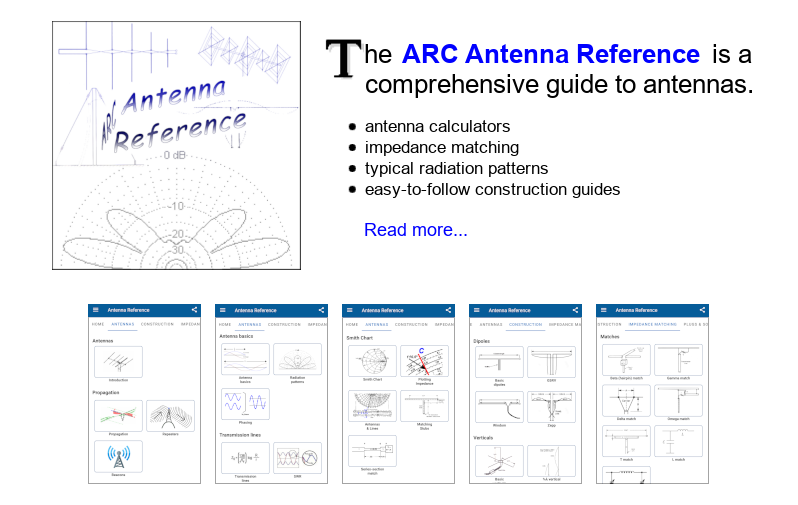
This CD provides a comprehensive guide to antennas with a good selection of antennas to consider for construction. As well as the common dipole, Vee, Quad, Yagi and vertical antennas there are many others. The Discone, Windom, Zepp and J-Pole, the X-Beam and ZL Special - just to name a few. Also included are typical radiation patterns for each antenna, a wide range of impedance matching methods and a table of specifications for different coaxial cables and wire.
The material presented includes basic antenna and propagation theory, transmission lines and impedance matching. Built-in calculators take the guess-work out of antenna construction, impedance match design and transmission line length by providing measurements in both metres and feet/inches.
Pictures, either photographs or line drawings, are included for each antenna so you can see what the finished product should look like. Additional to the built-in calculators are a range of programs in the Files section for computing antenna dimensions, as well as some antenna modelling software so that you can simulate the antenna of your choosing - and both MS-DOS / Windows and Linux are supported.
There is a Data section which has tables of coaxial cable types, wire data for conversion between AWG and metric wire sizes as well as resistance values for ordinary copper wire. A quick explanation of the relationship between frequency and wavelength, and wiring diagrams for common connectors used in radio round out this section.
All of the material is accessed from a menu bar which appears at the top of each page. To get full use of the material requires an internet browser which supports frames and JavaScript such as Internet Explorer 4 or Netscape 4 (or later). It's easy to use because the CD interface is HTML driven which means you browse the CD as if you were on the Internet.

Contact